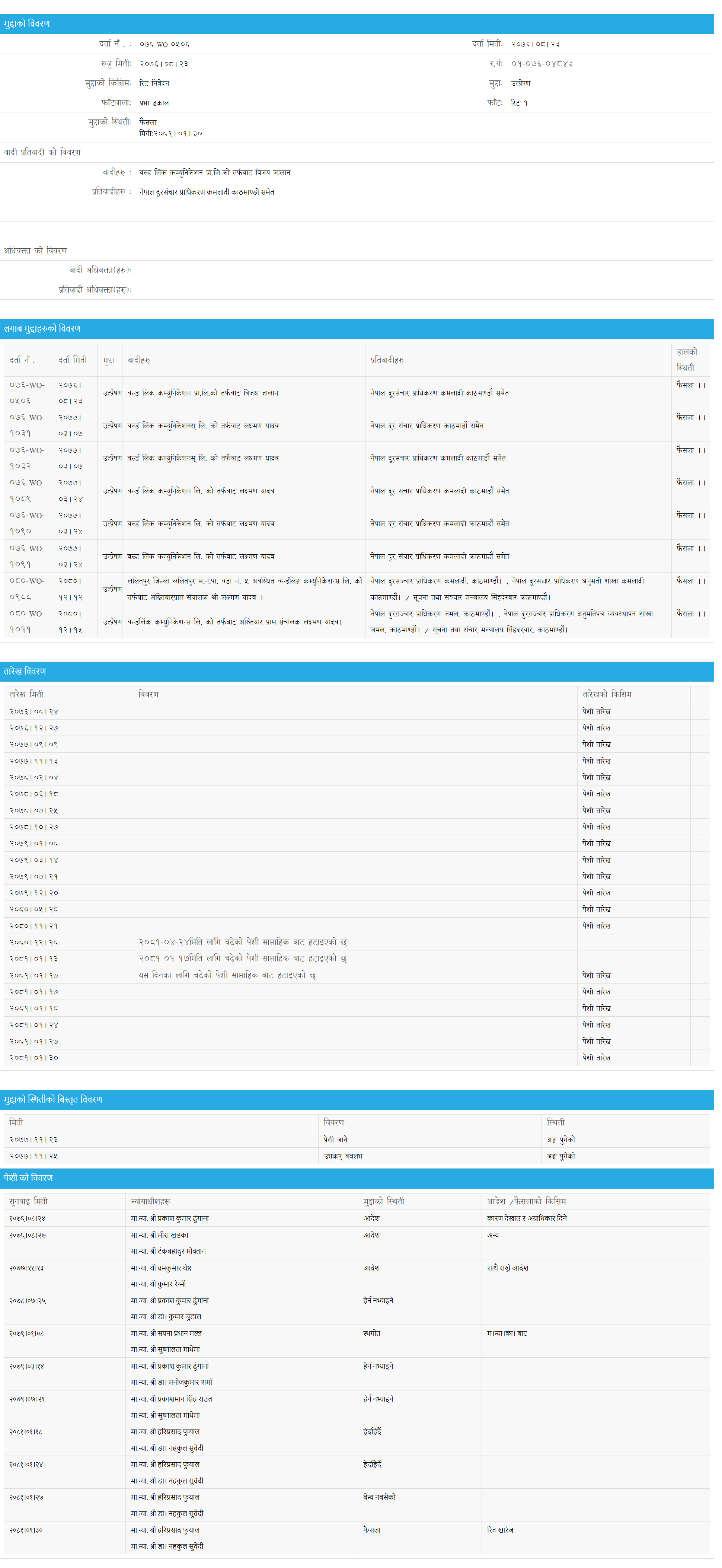
In a significant development, the Supreme Court of Nepal has ruled in favor of the government in a longstanding dispute over internet taxes with internet service providers (ISPs). The decision, announced on today on Baisakh 30, 2081, marks a pivotal moment in the ongoing conflict between the Nepal Telecommunications Authority (NTA) and Internet Service Provider (ISP).
The case, first registered in 2076/08/23 and decided upon on 2081/01/30, was filed by Bijaya Jaiswal on behalf of Worldlink Communications Pvt Ltd against the Nepal Telecommunications Authority and other parties. The Supreme Court’s verdict dismissed the writ and upheld the government’s stance, ordering ISPs to pay taxes for maintenance fees as well – which they were refusing to stating that it does not fall under telecommunication service.
Background:
The crux of the dispute revolves around the government’s assertion that ISPs are obligated to contribute 2% of their income to the Rural Telecommunication Fund and 4% royalty to the government. An internal investigation revealed that ISPs owe over Rs 2.5 billion in unpaid fees and royalty. However, ISPs argue that the government’s imposition of additional taxes and royalty contradicts agreements reached five years ago.
This standoff reached a critical juncture on May 3, 2024; resulting in a nationwide internet blackout. Over 80% of households were left without internet access as ISPs struggled to pay bandwidth fees to Bharti Airtel Ltd and TATA Communications, the company controlling much of the country’s access to the global internet. The tax dispute led to significant downtime for home broadband customers, highlighting the urgency of resolving the conflict.
The current court verdict, although long overdue, comes as a timely intervention to prevent further disruptions resulting from the standoff between NTA and ISPs. The decision, delivered by Honorable Justices Hari Prasad Phuyal and Nahakul Subedi, underscores the importance of upholding legal and regulatory frameworks to ensure the stability and reliability of essential services like internet connectivity.
This ruling is poised to have far-reaching implications for the telecommunications sector in Nepal, shaping the future landscape of internet governance and taxation policies. As stakeholders navigate the aftermath of this decision, it is imperative to foster constructive dialogue and collaboration to address underlying challenges and promote sustainable growth in the digital ecosystem.
Below is the flow of events and development in the case filed taken directly from the Supreme Court’s website: