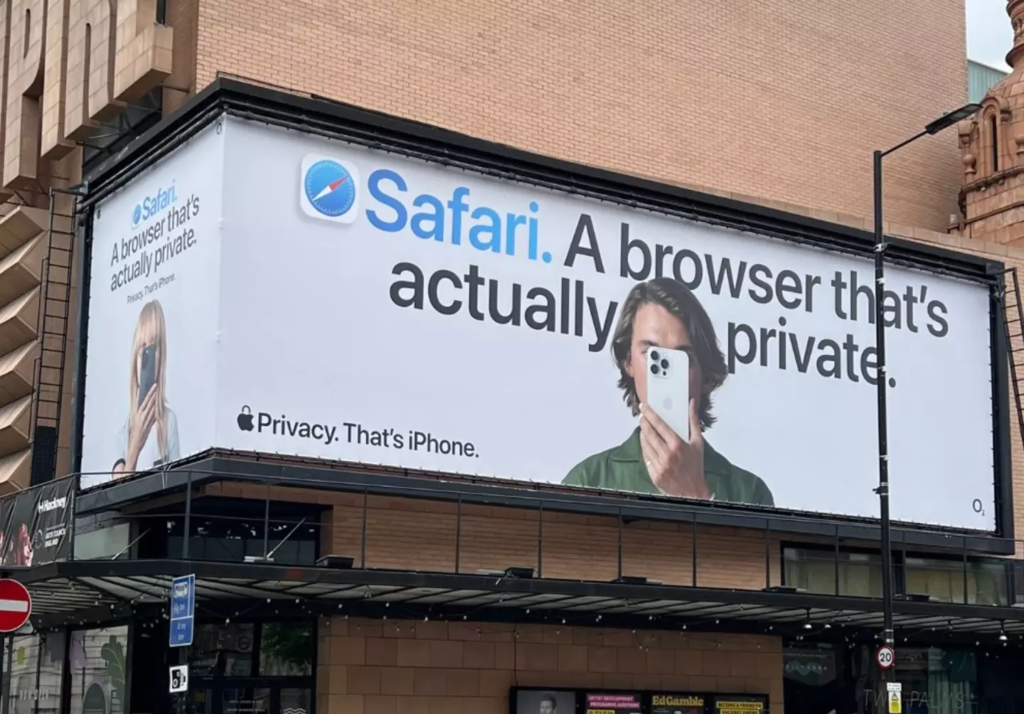
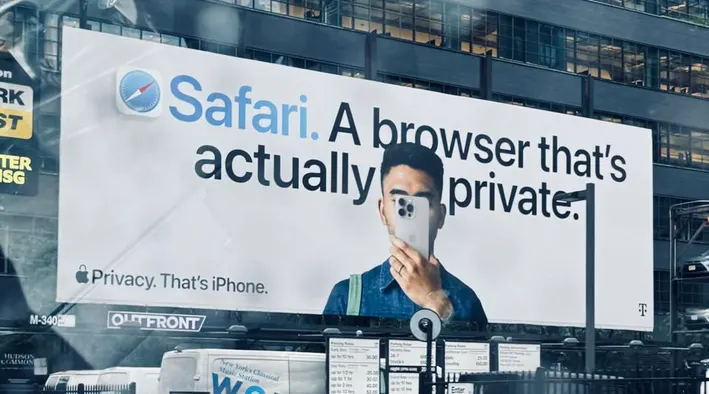
Apple has recently launched a striking global campaign urging its 1.46 billion iPhone users to start using Safari as default (and indirectly asked to stop using Google Chrome due to privacy concerns). This bold move involves prominent billboards in major cities like San Francisco, London, and Paris, promoting Safari as “a browser that is actually private.” While not explicitly naming Chrome, Apple’s message is a clear jab at Google’s browser, known for its extensive data collection practices.
In this Article
Historical Context – Apple vs. Google Complex Relationship
Apple and Google have had a complex relationship over the years. Initially, the two tech giants collaborated closely, with Google services like Google Maps and YouTube being essential part of the iPhone’s ecosystem. However, as both companies expanded into each other’s core businesses, tensions grew. Google’s development of Android, a direct competitor to Apple’s iOS, marked the beginning of a fierce rivalry. Despite this, the companies have maintained a lucrative deal where Google pays Apple a substantial sum to remain the default search engine on Safari, underscoring the complexity of their relationship.
Why Now?
At present, about 30% of iPhone users have set Chrome as their default browser. Google aims to boost this number to 50% by 2030, according to a report from Swipe Insight. Achieving this would mean adding another 300 million iOS devices to Chrome’s user base. In today’s competitive landscape, retaining user loyalty to specific apps directly impacts revenue. Apple is keen on maintaining its dominant position in the iPhone browser market and does not want to lose its stronghold.
Apple’s strategy targets two major issues associated with Chrome:
- Tracking Cookies: Chrome is notorious for its extensive use of tracking cookies. Users frequently encounter pop-ups asking for consent to third-party cookies, which track their online activities. Once users delve into Chrome’s privacy settings, they often discover an overwhelming number of sites monitoring their browsing habits. According to Google’s Privacy Sandbox report, these cookies are expected to remain in use until at least 2025.
- Incognito Mode Misconceptions: Google has marketed Incognito Mode as a privacy feature, but it has come under scrutiny for not being as private as users might believe. A $5 billion class-action lawsuit revealed that user data is still collected in Incognito Mode, contrary to Google’s privacy assurances. They lost the motion to dismiss the case and eventually settled out of court.
Safari, on the other hand, has built reputation as a browser that mitigates these concerns from the start. It prevents cross-site tracking by default and, with an iCloud+ account, can hide users’ IP addresses. This privacy-centric approach provides Apple with a strong foundation to promote Safari over Chrome and highlight the shortcomings of its competitor.
Privacy Concerns and Strategic Moves
Apple’s campaign highlights the growing importance of digital privacy. The company has been emphasizing its commitment to user privacy as a key differentiator. Apple’s latest ad, dubbed “Flock,” starkly depicts the surveillance users face when using non-Apple browsers, portraying security cameras tracking every move and suggesting that only Safari can provide a respite from this pervasive monitoring.
The campaign comes amidst growing criticism of Google Chrome’s data collection practices, particularly its Incognito Mode, which has been found to still collect user data. This revelation has sparked debates about the true extent of privacy users can expect from Google services. By pushing Safari as the more private option, Apple aims to leverage these privacy concerns to attract users away from Chrome and towards its ecosystem.
Strategic Advantages
For Apple, the strategic advantage is clear: strengthening its position as a privacy-first company helps differentiate its products in a competitive market. By emphasizing Safari’s privacy features, Apple aims to reinforce user loyalty and potentially increase its market share in the browser space. This move also aligns with broader trends towards privacy-focused technology solutions, resonating with users increasingly wary of data exploitation.
For Google, the challenge is to address these privacy concerns without losing the vast user base it has built with Chrome. The company’s response will likely involve enhancing Chrome’s privacy features and transparency about data practices to rebuild user trust.
User Impact
The campaign’s impact on users is multifaceted. On one hand, it raises awareness about privacy issues, encouraging users to be more cautious about their online activities. On the other hand, it challenges users to reconsider their browser choices, potentially leading to a shift in market dynamics. Users may benefit from enhanced privacy protections as a result of the intensified competition between Apple and Google.
Apple’s warning to iPhone users about Google Chrome is more than a marketing campaign; it reflects the increasing importance of digital privacy in the tech industry. As Apple and Google continue to compete fiercely, users can expect both companies to innovate and improve their offerings, ultimately benefiting from better privacy and security features.