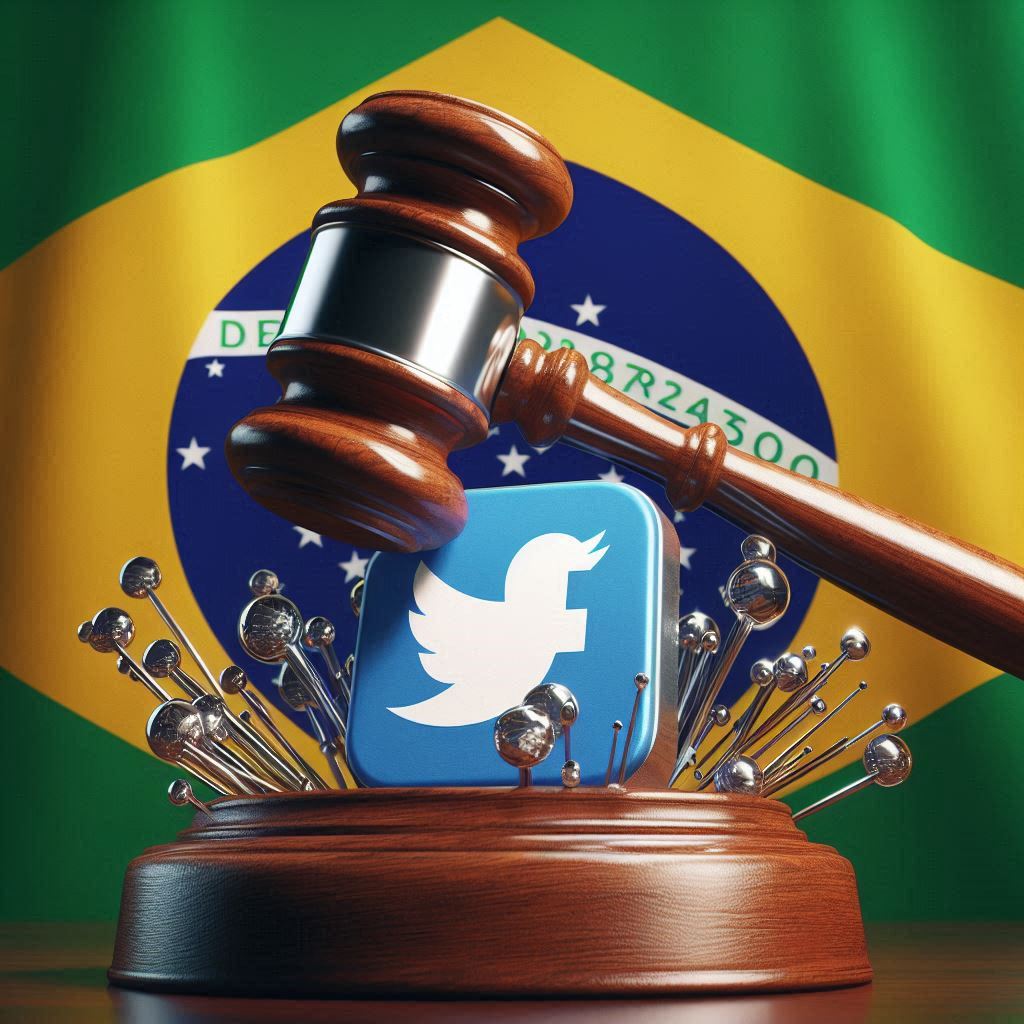
On September 2, 2024, Brazil’s Supreme Court upheld a decision to ban Twitter (now rebranded as X) across the country, following a virtual trial in which a panel of five justices voted unanimously to maintain the suspension. This ruling confirmed an earlier order by Justice Alexandre de Moraes, who has been at the forefront of efforts to combat misinformation and hate speech on social media platforms in Brazil.
Background of the ban
The controversy began when X failed to comply with several court orders, including the requirement to name a legal representative in Brazil. According to Brazilian law, all internet companies must have a local representative to manage legal matters, ensuring that the company can respond to legal decisions promptly. However, X removed its legal representative in Brazil earlier this month after Justice de Moraes threatened her with arrest for not adhering to the court’s demands.
Justice de Moraes issued a full suspension of X until the platform meets several conditions, including appointing a new legal representative and paying fines totaling around 18.5 million reals (approximately $3.28 million). The ban affects about 40 million Brazilians who use X at least once a month, making it a major move in one of the platform’s largest markets.
The decision’s implications for Twitter and global social media
The Supreme Court’s decision is a major ruling that signals a tougher stance on social media governance in Brazil. This case is a typical example of the growing tension between global tech giants and national governments over regulatory compliance, content moderation, and the balance between free speech and public safety. It highlights the increasing willingness of governments to press for higher control over social media platforms that fail to comply with local laws and regulations.
For X, this ban not only impacts its user base in Brazil but also sends a strong message to other countries that are struggling with similar issues. Governments around the world may take this decision as a precedent to enforce stricter regulations on tech companies, demanding greater accountability and compliance with national laws.
Musk is not backing down
Elon Musk, founder of X, did not submit to the Supreme Court’s ruling in Brazil. Instead, he sought a workaround by enabling access to X via his satellite internet provider, Starlink. With over 250,000 users in Brazil, Starlink, which is controlled by Musk through his other company, SpaceX, provides an alternative means for users to access the platform, circumventing the ban imposed on internet service providers (ISPs).
Musk publicly criticized the ruling, calling Judge Moraes a “dictator” and advocating for his impeachment for infringing on free speech. He was adamant that the court’s decision to enforce a complete and comprehensive ban on X was a violation of fundamental rights. The ruling imposed substantial fines on ISPs that failed to enforce the ban, but Starlink, being directly controlled by Musk, fell outside the reach of traditional ISPs.
However, in response, Brazil’s Supreme Court moved to freeze Starlink’s accounts within the country for failing to comply with the directive, marking a critical escalation in the standoff between Musk and Brazil’s judiciary.
What this means for other nations and platforms
The ban in Brazil could have far-reaching consequences for social media companies globally. If other countries follow Brazil’s lead, we could see a rise in regulations that require social media platforms to establish local offices and appoint representatives to handle legal matters. This would force companies like X, Meta, and others to rethink their operational strategies and increase their focus on compliance and local governance.
Moreover, this decision could trigger debates around freedom of expression and censorship, particularly in democratic nations where the public relies on social media for information and communication. As platforms face increasing pressure to manage harmful content, they must navigate the fine line between moderating content and infringing on users’ rights to free speech.
The decision by Brazil’s Supreme Court to uphold the ban on X highlights a growing global trend toward stricter regulation of social media platforms. This move not only has immediate implications for the millions of Brazilians who use X but also sets a precedent for other nations grappling with the challenges of digital governance in the age of misinformation and hate speech. For social media companies, this signals a critical juncture where compliance with national regulations becomes paramount to maintaining their global footprint.
Implications for Nepal and similar countries
For countries like Nepal, which have seen political volatility and shifts in governance, the developments in Brazil provide a cautionary tale. The Nepalese judiciary and government could consider similar steps to regulate social media if they perceive threats to public order or national security. This is already demonstrated by the government’s pre-empt step towards banning TikTok as hate post increased. However, this also calls for a balanced approach, ensuring that any actions taken are in line with democratic principles and do not unduly restrict freedom of speech.
Nepal’s government and judicial bodies may need to establish clear guidelines and engage in dialogue with tech companies to create a framework that supports both regulation and freedom of expression. Learning from Brazil’s example, Nepal could avoid potential pitfalls by promoting transparency, setting up local representatives for social media platforms, and ensuring that any legal actions are justified and proportionate. This is the right time to do it all as the bill for such platforms are at the very early stage with flow of communications nor implementation reached to the level as desired.