

In search of sustainable energy solutions, the idea of installing solar panels in parking lots has gained significant traction as of late. This approach presents a compelling alternative to using prime agricultural land for solar farms. Here, we explore the benefits, cost implications, and broader impact of this innovative solution.
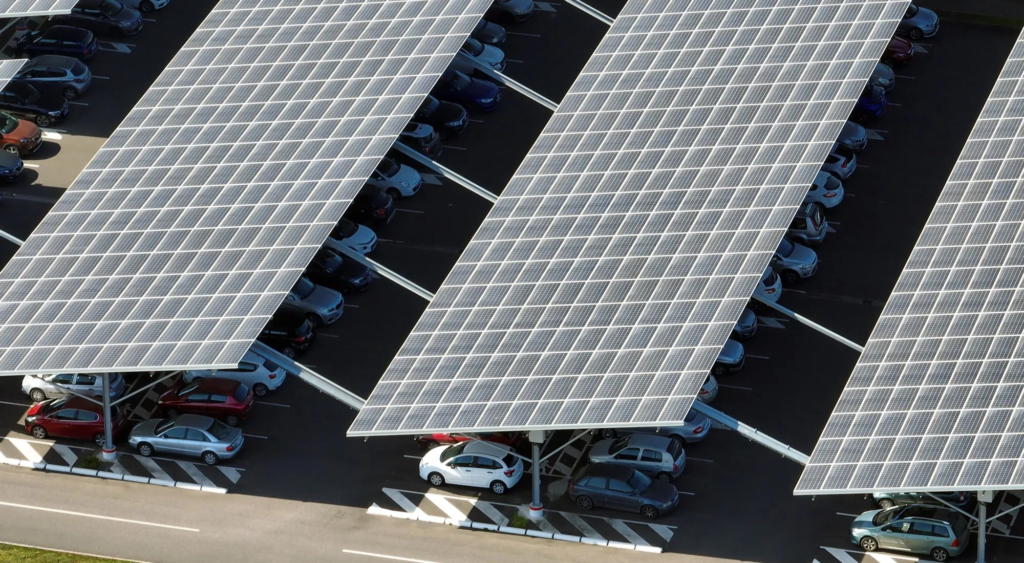
Benefits of Solar Panels in Parking Lots
1. Efficient Use of Space: Parking lots are huge and often underutilized spaces that can be transformed into energy-generating hubs. Solar canopies in parking lots utilize the existing space without displacing other essential land uses. According to the Lawrence Berkeley National Laboratory, pavement constitutes 35-50% of urban surface area, with parking lots making up 40% of that pavement. This makes parking lots ideal locations for solar installations.
2. Environmental and Economic Benefits: Solar canopies provide shade, which reduces the heat load on vehicles, potentially improving fuel economy by reducing the need for air conditioning. This can lead to significant energy savings for drivers. Additionally, these installations can generate substantial electricity, reducing utility costs for businesses and decreasing greenhouse gas emissions.
3. Enhancing Electric Vehicle Infrastructure: With the rise of electric vehicles (EVs), solar canopies equipped with EV charging stations offer a dual benefit. They provide renewable energy for charging vehicles and contribute to reducing the load on the electric grid. This is particularly important as the demand for daytime charging increases.
4. Community and Grid Resilience: Solar canopies can support microgrids, making communities more resilient to power outages caused by natural disasters or other disruptions. They can act as local energy sources, enhancing the stability of the electrical grid.
Cost Comparison: Parking Lots vs. Agricultural Land
Initial Costs: Installing solar panels in parking lots typically involves higher initial costs compared to agricultural land due to the need for robust structures to support the canopies and potential integration of EV charging stations (if we are to also consider that into the equation).
Operational Savings: Despite higher upfront costs, the operational savings and additional benefits such as shaded parking and EV charging capabilities often justify the investment. Solar canopies can reduce energy transmission losses and generate electricity close to the point of use, which is more efficient than transporting power from remote solar farms.
Land Use and Sustainability: Using parking lots for solar installations avoids the contentious issue of occupying prime agricultural land, which is crucial for food production and the ecosystem. This sustainable approach ensures that valuable land remains available for agricultural use while urban spaces are optimized for renewable energy generation.
Addressing Concerns
Economic Viability: The primary challenge remains the initial capital investment. However, various incentives, such as federal solar tax credits and grants, can significantly offset these costs in many countries. For instance, the federal solar tax credit can deduct 30% of total commercial solar installation costs in USA.
Policy and Awareness: Increasing awareness about the benefits of solar canopies and the available incentives can drive adoption. Policymakers can also play a crucial role by mandating solar-powered carports in new surface parking lots and offering additional incentives for public and private entities.
Applicability to Nepal
Nepal, with its unique geographic and socio-economic context, presents both challenges and opportunities for the implementation of solar panels in parking lots.
Geographical Considerations: Nepal’s varied topography, from the plains of the Terai to the hilly regions and the Himalayas, means that urban areas often face space constraints. Parking lots in cities like Kathmandu, Pokhara, and other urban centers are typically underutilized spaces when we’re to look at the major bus parks in these cities – that could be transformed into energy-generating hubs without displacing other crucial land uses. The on-road paring if it’s to continue can also be incorporated along with footpath for the coverage area offering shade and shelter not just for vehicles but public as well.
Economic and Environmental Benefits: The benefits of solar canopies in parking lots are particularly relevant to Nepal. These installations can help reduce the urban heat island effect, provide shaded parking, and contribute to the country’s renewable energy goals. Given Nepal’s reliance on hydropower, diversifying energy sources with solar can enhance energy security and reduce complete seasonal dependence on water flow or energy import.
Feasibility and Policy Support: The initial cost of installing solar canopies might be a hurdle. However, with international support, grants, and government incentives, these projects can become economically viable. Nepal’s government and local municipalities can play a crucial role in promoting solar canopies through supportive policies and incentives.
Community and Grid Resilience: Solar canopies can also support Nepal’s efforts towards building more resilient and self-sustaining communities, especially in urban areas prone to power outages. By supporting microgrids, these installations can enhance the stability of the electrical grid and contribute to disaster resilience.
Solar panels in parking lots offer a smart and sustainable solution for renewable energy generation. They maximize the use of existing urban spaces, support the growing EV infrastructure, and contribute to environmental sustainability without compromising agricultural productivity. With appropriate incentives and policies, this innovative approach can become a standard practice, fostering a greener future for urban environments.
By embracing solar canopies in parking lots, we not only address the pressing need for renewable energy but also enhance community resilience and create a more sustainable urban landscape. This approach holds significant potential for countries like Nepal, where space optimization and renewable energy are critical to sustainable development.


